Our Net Zero Journey

The mission is underway

Climate change remains one of the most urgent global challenges, demanding accelerated and coordinated action to limit warming to well below 2°C and ideally close to 1.5°C beyond pre-industrial levels. Since the adoption of the Paris Agreement in 2015, meaningful progress has been made, yet the pace of change must increase significantly if we are to meet the evolving scale of the crisis.

In the UK, the policy landscape has sharpened: the government’s latest nationally determined contribution (NDC) commits to an at least 81% reduction in total net greenhouse gas emissions and removals by 2035 compared to 1990 levels. The overarching target for achieving net-zero GHG emissions by 2050 remains legally binding.

These policy commitments are driving a surge in innovation and uptake of green technologies, the construction of net-zero and whole-life-carbon-aware buildings, and the acceleration of the transition to clean energy across all sectors. For building owners, developers, advisers and industry bodies, this has shifted from a “nice to have” to a strategic imperative — and a major opportunity.

At Watkins Payne, supporting clients to meet these evolving sustainability demands is central to our offering. We work across a broad range of schemes — from BREEAM and NABERS to whole-life-carbon assessments and emerging standards — enabling you to align your built-environment assets with current and future-proof decarbonisation pathways.

Visit our Sustainability page to learn how we can help you translate ambition into action — and support your sustainability goals with the rigour, innovation and expertise required in 2025 and beyond.

Mission Statement

At Watkins Payne we are dedicated to reducing our impact on the environment. We have worked hard to achieve zero emissions in our direct operations in 2025, and seek to be a carbon neutral organisation by 2030, according to definitions of the Science Based Targets initiative (SBTi). We have made the following commitments to see that our actions are robust and comprehensive:

1.

Our emissions reduction goals have been approved by the Science Based Target initiative and are in line with limiting global warming to 1.5°C. We have committed to net zero in the operation of our assets under the World Green Building Council’s Net Zero Carbon Buildings Commitment.

2.

Our plan includes both the direct activities of our organisation (emissions scopes 1 and 2), and the wider impact of our whole value chain (emissions scope 3).

3.

We will seek to prioritise emissions avoidance and emissions reduction. Additionally, through the development of an offsetting strategy based on a recognised offsetting framework, we will seek to offset to compensate for unavoidable emissions.

4.

Our reporting is performed by an independent specialist third party in accordance with the Greenhouse Gas Protocol. Our plan is underpinned by strong data and we will continue to improve data coverage/integrity and report our progress annually.

External Commitments

Science Based Targets

We have set an emissions reduction target through the Science Based Targets initiative (SBTi), joining over 4,000 companies worldwide with approved targets.

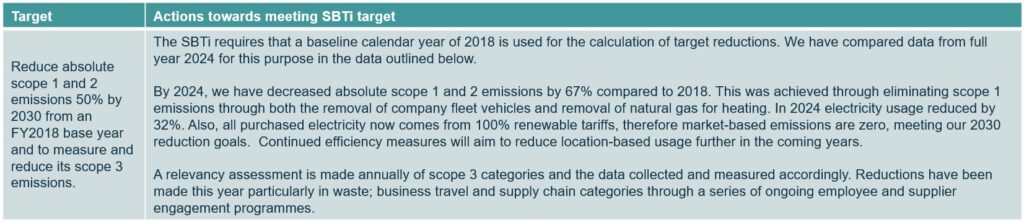
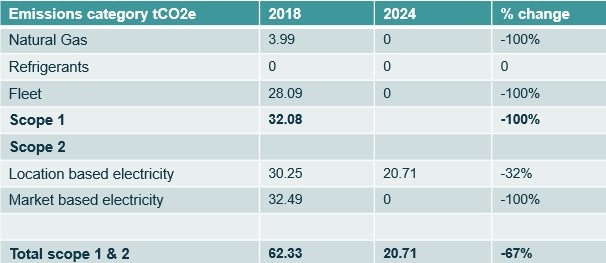
▪ We commit to a 50% reduction in our scope 1 and 2 GHG emissions by 2030 from the SBTi required 2018 base year, and to measure and reduce our scope 3 emissions. This target has been approved using a streamlined validation by the SBTi, and is consistent with limiting global warming to 1.5°C

World Green Building Council – Net Zero Carbon Buildings Commitment

We commit to net zero carbon in operation for all assets under our control by 2030.

This requires us to:
▪ Commit to only occupying net zero assets by 2030
▪ Disclose our scope 1 and 2 emissions
▪ Act to implement our carbon reduction strategy
▪ Verify our energy and emissions data
▪ Advocate for net zero among our clients and partners

Climate Group EP100

Through implementation of our Net Zero buildings commitment, we are a member of the EP100 initiative.

Together with over 100 energy-smart companies, we are improving our energy productivity and supporting the transition to cleaner energy.

For more information, find us listed at https://www.theclimategroup.org/ep100-members

GHG Emissions FOOTPRINT

Our external commitments have a focus on our direct emissions (scopes 1 and 2). But we acknowledge that our impact goes far beyond this, and we have an opportunity and responsibility to influence emissions throughout our value chain (scope 3).

Here’s where our emissions come from (2024-25):

11%

Buildings

Electricity use and gas for heating

8%

Travel

Travel and transport for business purposes

22%

Employee Commuting

Travel to work and energy use associated with remote working

59%

Supply Chain

Emissions relating to the goods and services that we buy

0%

Business Transition

One-off purchases in transitioning to a limited company

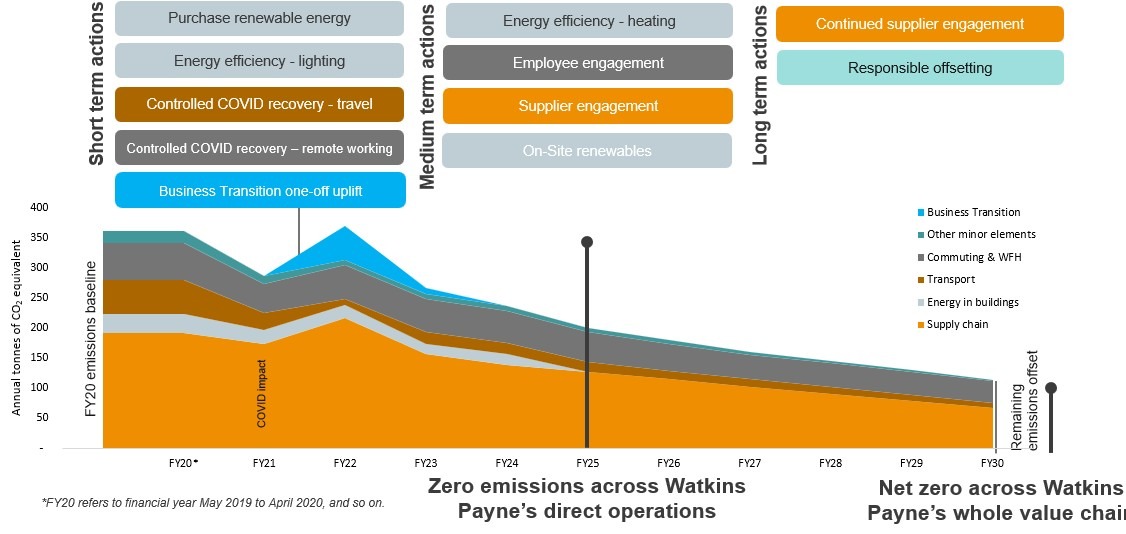
Roadmap

Progress

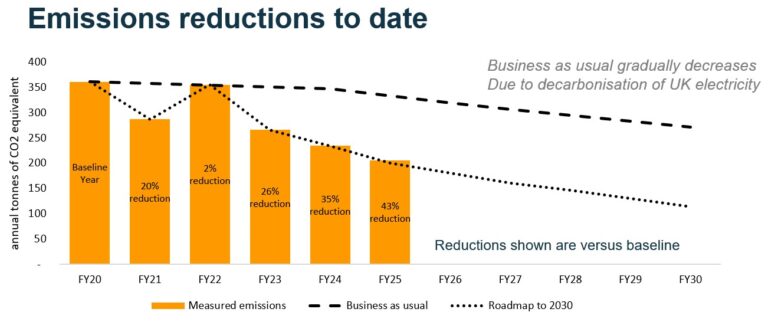
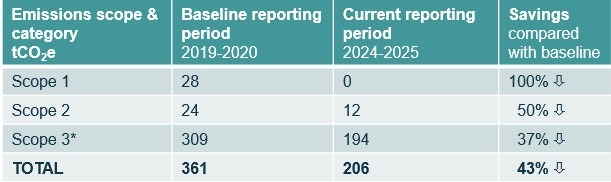
Total emissions have reduced 12% since prior year and 43% compared to the baseline year. This has been driven by good reductions in electricity use, and by a continued reduction in supplier emissions. There has been a significant reduction in business travel and waste emissions. The only increase is a slight uplift in employee commuting emissions. Increased monitoring is in place to mitigate this. Large reductions were seen in FY 2021 and a subsequent increase in FY 2022 were due to the impact of Covid on normal business practises. Reductions remain on track to meet projected targets.

  • 2021/22

    Signed up to WorldGBC’S Net Zero Carbon Buildings Commitment

  • 2021/22

    GHG emissions measured & 2030 roadmap in place

  • 2021/22

    Targets approved by the SBTi

  • 2022/23

    Move to more energy efficient London office

  • 2024/25

    Zero emissions across Watkins Payne’s direct operations

  • 2029/30

    WorldGBC’s Net Zero Carbon Buildings Commitment reached

  • 2029/30

    Carbon neutral across Watkins Payne’s whole value chain

Carbon reduction plan

At Watkins Payne we are dedicated to reducing our impact on the environment. We are working towards:

Our targets have been approved by the Science Based Targets initiative (SBTi) and we are a signatory to the World Green Buildings Council’s Net Zero Carbon Buildings Commitment.

* Scope 3 emissions include purchased goods and services; fuel and energy related activities; waste generated in operations; business travel; and employee commuting and remote working.

Carbon reduction action

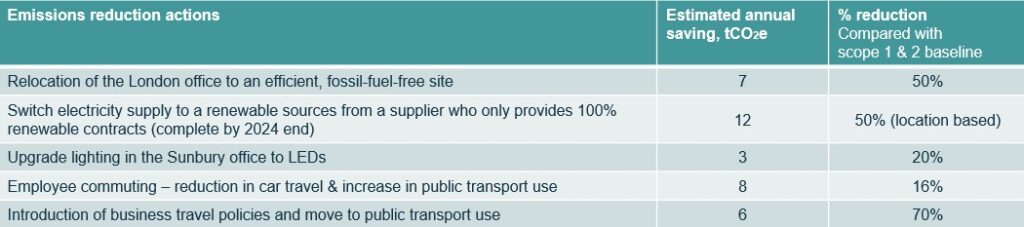
The following measures have been implemented since the 2019/20 baseline:

Steady progress has been made across scopes 1, 2 and 3 to mitigate the post pandemic emissions increase and to continue towards our emissions reduction goals. Future initiatives will include